
Translanguaging Explained: 4 Metaphors Every Educator Needs to Know
Can you explain Translanguaging without the academic jargon?
More than once at a workshop, I’ve had a participant raise their hand and ask, "I think I understand translanguaging... but how do I explain it to my staff?" Or they'll parrot back a definition that uses jargon like “whole language repertoire” or “fluid and dynamic language” but then struggle to offer an example. I appreciate their honesty because it shows their dedication to transferring translanguaging into practice.
For this blog post, I’ll hurdle over the extensive scholarship by the likes of Ofelia, Susana, Kate and Laura* (flexing that I am on a first name basis with these researchers) and I’ll dig right into a powerful tool that has helped hundreds of educators move past the fog and into the realm of practice. And I do this by offering up 4 clear metaphors to help bridge the gap between theory and practice by connecting concepts to experiences we already understand.
*I list the references below if you’d like to read their work. I highly recommend that you do.
4 metaphors to change the conversation
Each of the following metaphors highlight a different aspect of translanguaging and what it means for multilingual learners to draw from their full linguistic repertoire. Together, they move the conversation beyond definitions and invite us to see translanguaging through a new lens. One that can reshape not only the way we explain the concept, but also how we support multilingual students in our classrooms.
1. Mirrors and Windows
One effective way to think about translanguaging is as both a mirror and a window. A mirror reflects who we are. It allows us to recognize ourselves in the world around us. When students are encouraged to use their entire linguistic repertoire, they receive a powerful message: Your language is welcome here and you don't have to leave part of yourself at the classroom door. Instead of viewing their home language as something to overcome, students begin to see it as an asset that strengthens their learning and affirms their identity. (España & Herrera, 2020)
But translanguaging is also a window. It lets us look beyond our own experiences and into the experiences of others. As students share ideas, stories, and perspectives across languages, everyone in the classroom benefits, not just multilingual learners. Classmates gain opportunities to hear different viewpoints, appreciate diverse cultural experiences, and develop empathy. Language can go beyond being just a tool for communication by becoming a bridge for building relationships.
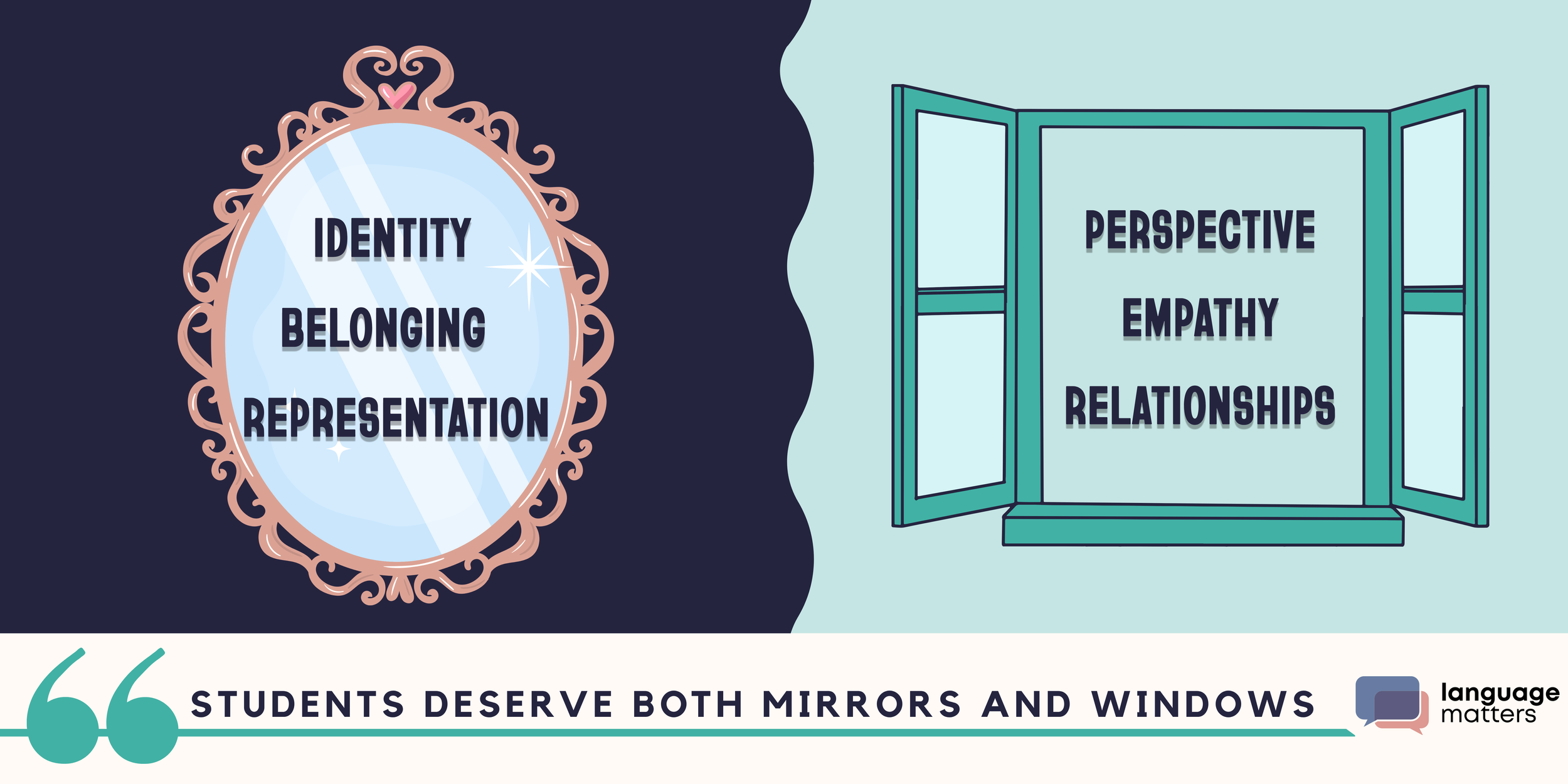
Without the mirror, students lose pieces of themselves. Without the window, they lose opportunities to build empathy and connection.
The Takeaway:
Translanguaging protects students' identities while expanding their perspectives. It reminds us that the goal isn't just to help multilingual learners access the curriculum. It's to create classrooms where every student's language and experiences enrich the learning experience for all.
2. One Pot vs. Two Bowls
One of the biggest misconceptions about multilingualism is that students store their languages in separate mental compartments, choosing one or the other depending on the situation. It's as if they have two bowls sitting side by side and simply decide which one to use. But that's not how language exists in our brains or our bodies. Allow me explain.
Language forms live in one pot, not two separate bowls. Imagine making soup where every ingredient—each distinct language—contributes its own flavor, simmering together into a unified dish. You wouldn't try to pull the carrots back out or separate the herbs from the broth, because the richness of the soup depends on those ingredients working together. Similarly, multilingual learners don't store their languages in separate mental compartments. Instead, they use an integrated linguistic repertoire, drawing on all their knowledge simultaneously to make meaning and deepen their understanding.
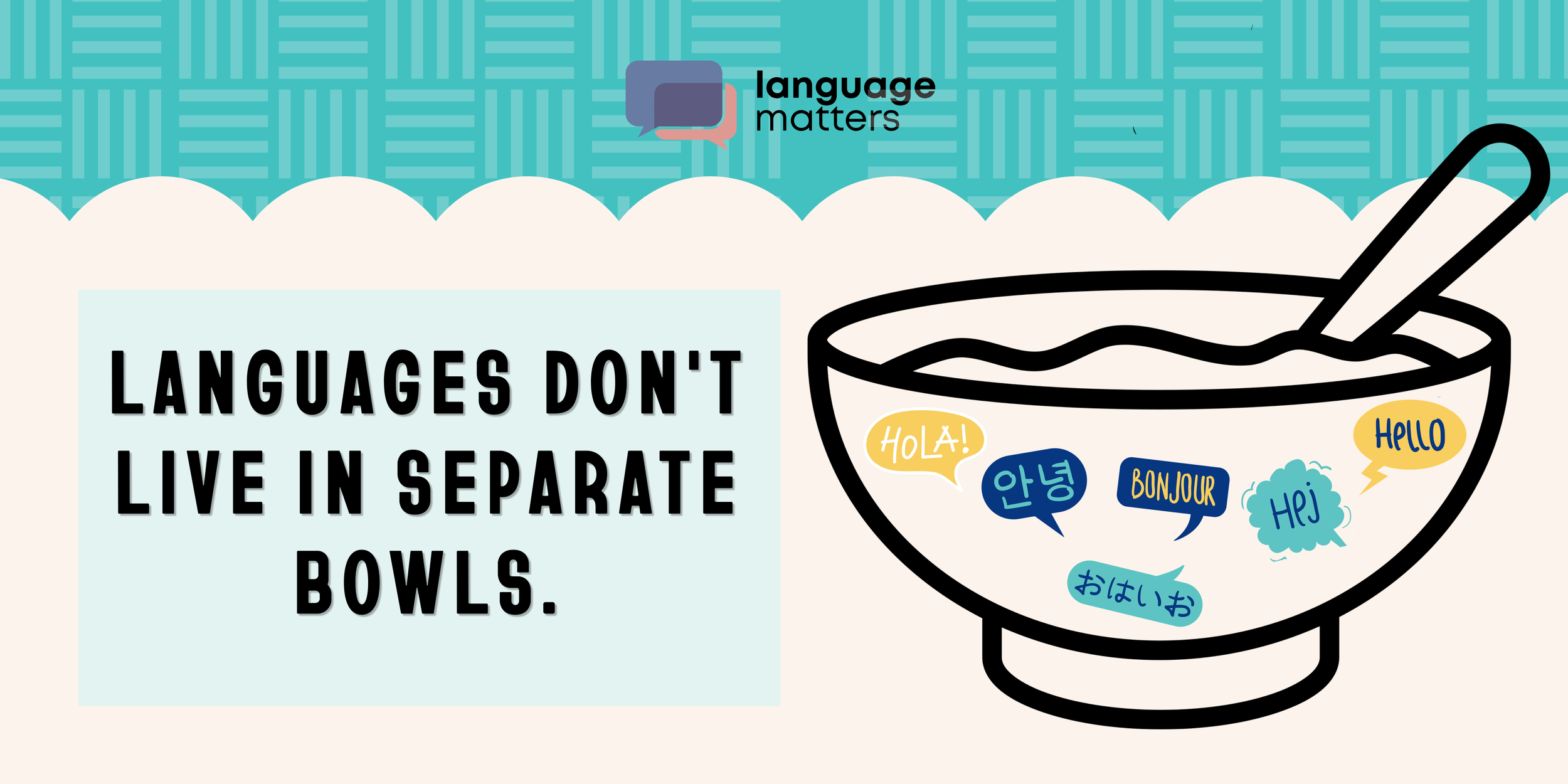
This is what translanguaging scholar Ofelia García refers to as the ‘whole language repertoire,’ (García & Wei, 2014). Their languages interact constantly, allowing students to draw from all of their linguistic knowledge to make meaning of grade level texts, solve problems, and communicate within and across their languages. If you watch cooking shows that criticize dishes for being “one note”... you’d never claim this of a multilingual student who skillfully draws upon their repertoire to go about the business of learning.
Is it clearer to you now why barbs like 'stay in English' or 'they’ll confuse the languages' absolutely fall apart, given how a one-pot framework illustrates the way multilinguals actually store and retrieve their linguistic data? Not only do those comments reflect a Monolingual Bias (achem) they limit and belittle an ML’s superpowers.
The Takeaway:
MLs don't think in separate language boxes. Their languages work together as one integrated system. Rather than asking students to turn off one language, translanguaging invites them to use every linguistic resource they have to deepen understanding and participate more fully in learning.
3. The ATV, not a Car
Think about the difference between a classic four-door sedan and an all-terrain vehicle (ATV). A sedan is designed for smooth, predictable roads while an ATV is built to navigate much more challenging terrain like dirt, gravel, mud, and steep hills. Here’s where this metaphor slaps: schools often value the equivalent of the car, preparing students for one smooth, predictable road. But we both know that academic language is but one kind of register we use in life. Multilingual learners move between homes, communities, workplaces, friendships, and cultures that constantly shift. Each setting calls for different ways of communicating, thinking, and connecting with others.
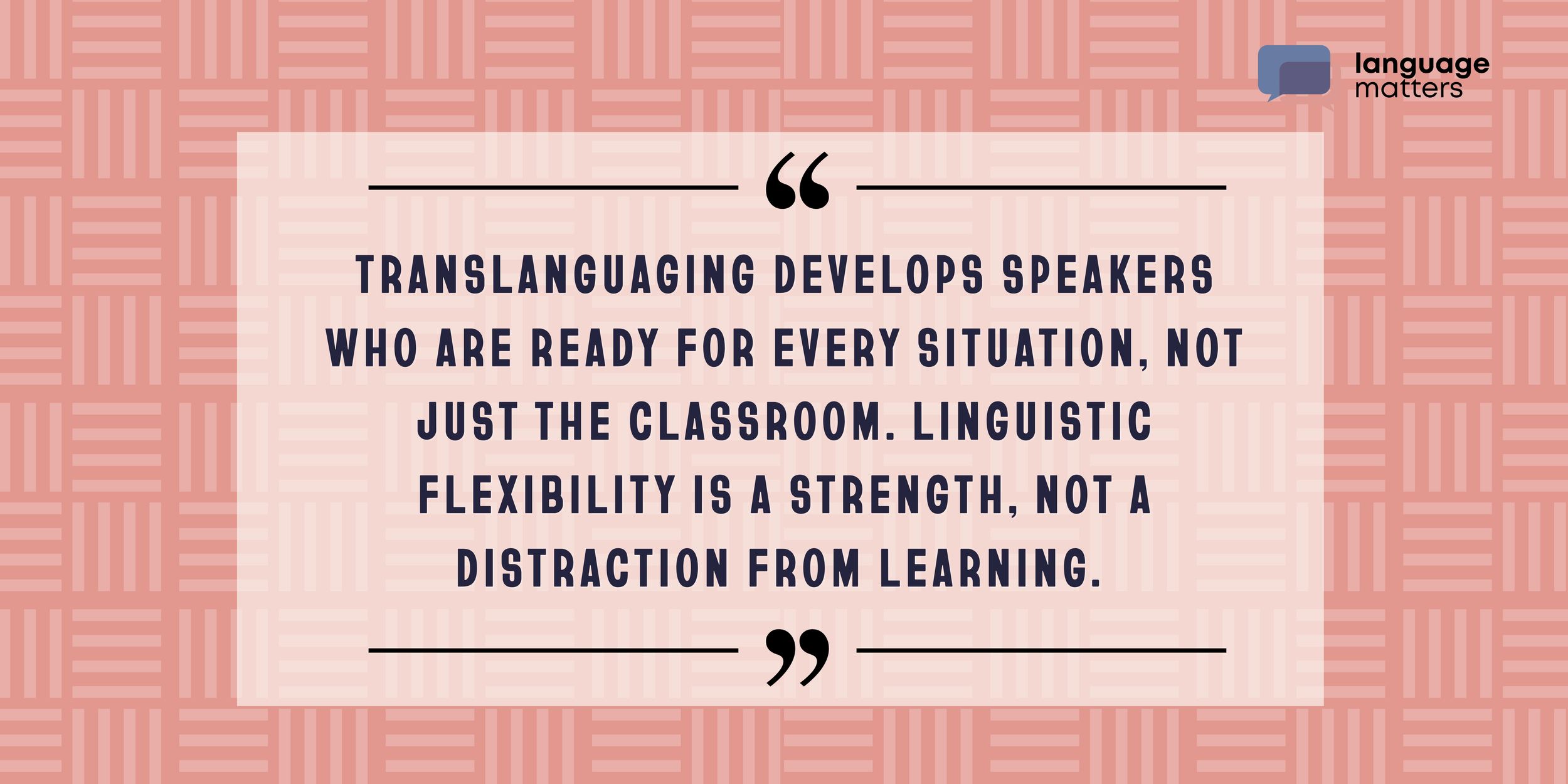
Translanguaging helps students develop the nimble communication practices to show up in their changing environments. This ATV metaphor reveals how MLs possess an adaptive and skillful set of tools to reach and connect with more humans in ways that a monolingual mind simply cannot. If our goal in 21st century education* is to prepare students for success beyond the classroom, then it becomes a moral imperative to celebrate a learner’s ability to adapt their language to different situations rather than expecting them to stay on one carefully paved road.
The Takeaway:
Translanguaging develops speakers who are ready for every situation, not just the classroom. Linguistic flexibility is a strength, not a distraction from learning
4. A toolbox not a Rulebook
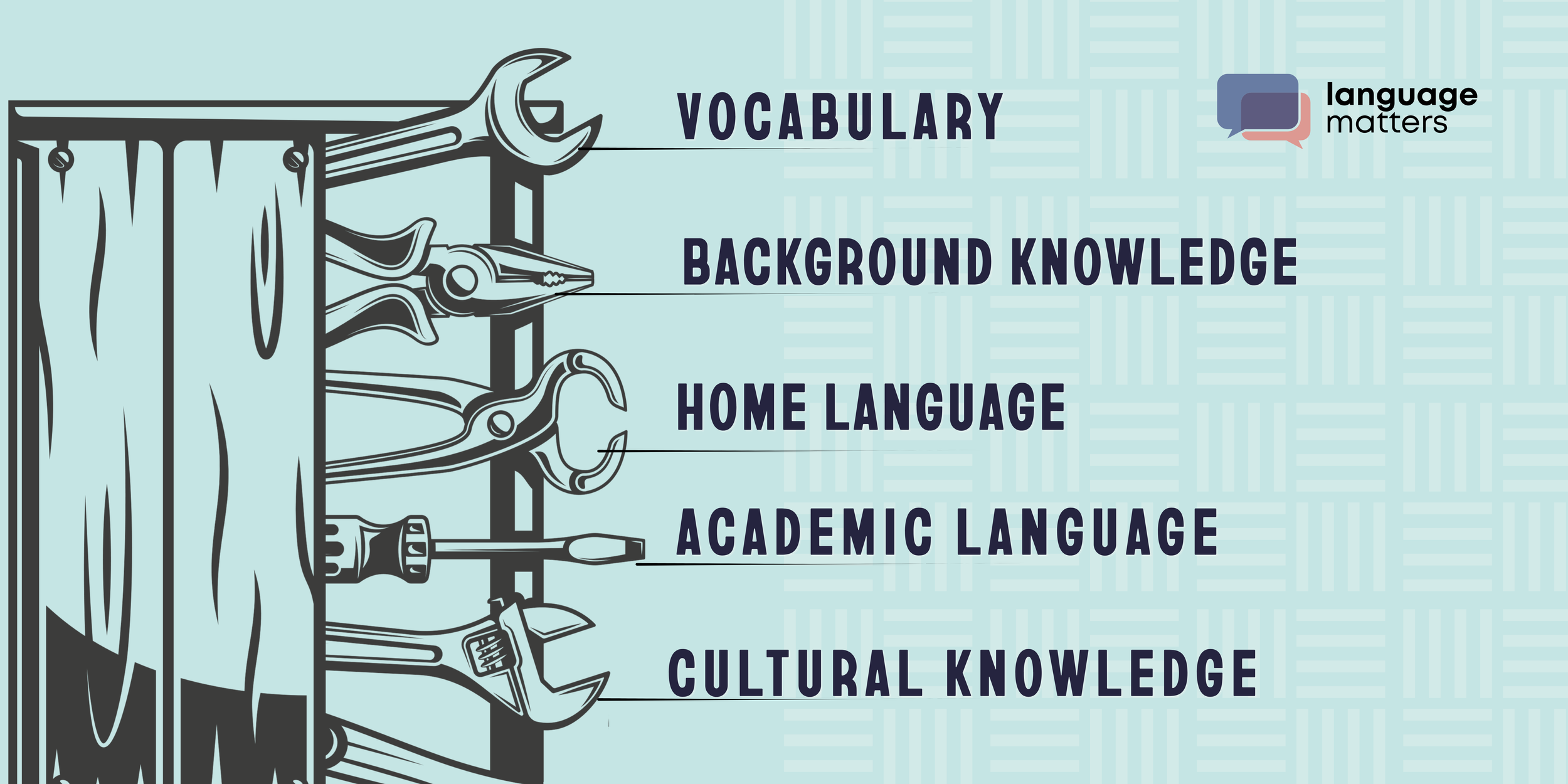
For the final metaphor, let’s look at translanguaging as a toolbox, not a rulebook. A rulebook specifically tells us what we can and can’t do. Black or white, right or wrong. A toolbox, on the other hand, gives students options. A handyman doesn't use a hammer for every job simply because it's the "correct" tool. They choose the tool that best fits the task at hand.
This metaphor challenges the biased belief that language mixing will delay learning or will confuse the child. We know from ample scholarship that MLs constantly make purposeful decisions with the linguistic resources available to them. Just as we encourage students to choose the right math strategy or writing technique for a task, we can also encourage them to choose the language resources that best support their learning.
The Takeaway:
Translanguaging isn't about breaking language rules. It's about giving students the ability to choose the right linguistic tool for the moment. When we trust multilingual learners to make those decisions, we create classrooms where language becomes a resource rather than a restriction.
Metaphors that Empower & Inspire
My hope is that each of these 4 metaphors inch you closer to some tangible insight around best practice in bilingual education. Whether you’re a ESL teacher hoping to pull in more native languages, or a coach looking to empower your team… the right translanguaging metaphor can help you Disrupt the Monolingual Bias. In short, we need to choose our metaphors carefully so let's choose ones that open doors instead of closing them. Ones that help us see possibility instead of limitation, assets instead of deficits, and recognize rather than deny our students’ experiences.
I’ll end with a brief reminder that language is power. The words we choose shape the way we think, and the way we think shapes the decisions we make. How we talk about translanguaging ultimately shapes the way we teach multilingual learners.
references:
García, O., & Wei, L. (2014). Translanguaging: Language, bilingualism and education. Palgrave Macmillan. https://doi.org/10.1057/9781137385765
García, O., Johnson, S. I., & Seltzer, K. (2017). The translanguaging classroom: Leveraging student bilingualism for learning. Caslon.
Espinosa, C. M., & Ascenzi-Moreno, L. (2021). Rooted in strength: Using translanguaging to grow multilingual readers and writers. Scholastic Teaching Resources.
