
Linguistic Shame in Schools: What We Assume When We Think We’re “Just Helping”
Discover how linguistic shame develops through everyday assumptions and learn practical ways to better support multilingual learners in your classroom.
THe best of intentions….
I was sitting in a coaching session with Veronica last week, and she was staring at a transcript of her own lesson. We were reviewing a clip where she had repeatedly stepped in to translate for an intermediate ML—a bright, engaged learner—without ever asking if she needed a translation.
“I was just trying to see if she understood democracy in English,” Veronica said, her voice dropping. But as we looked at the video, and I did that hard but necessary 8 second pause, it dawned on Veronica that she hadn’t been supporting the student; she had been limiting her language development. Because when teachers assume they know what a student needs—without ever inviting them into the conversation—we aren't just teaching; we are reinforcing a system that equates English proficiency with intelligence. We are also sending a message that productive struggle around language isn’t expected in US schools.
Linguistic Shame
I use the following points to prompt self-reflection during my coaching for linguistic justice cycles. Grab a pen and paper and see what surfaces when you reckon with some of these bad habits.
Translating for students without asking if they want or need it
Assuming silence means lack of understanding
Saying “She’s still learning English” as shorthand for “She can’t access grade-level thinking”
Praising students for “finally speaking English” when they’ve been multilingual all along
Students quietly minimizing their own language ability because they’ve learned it feels safer
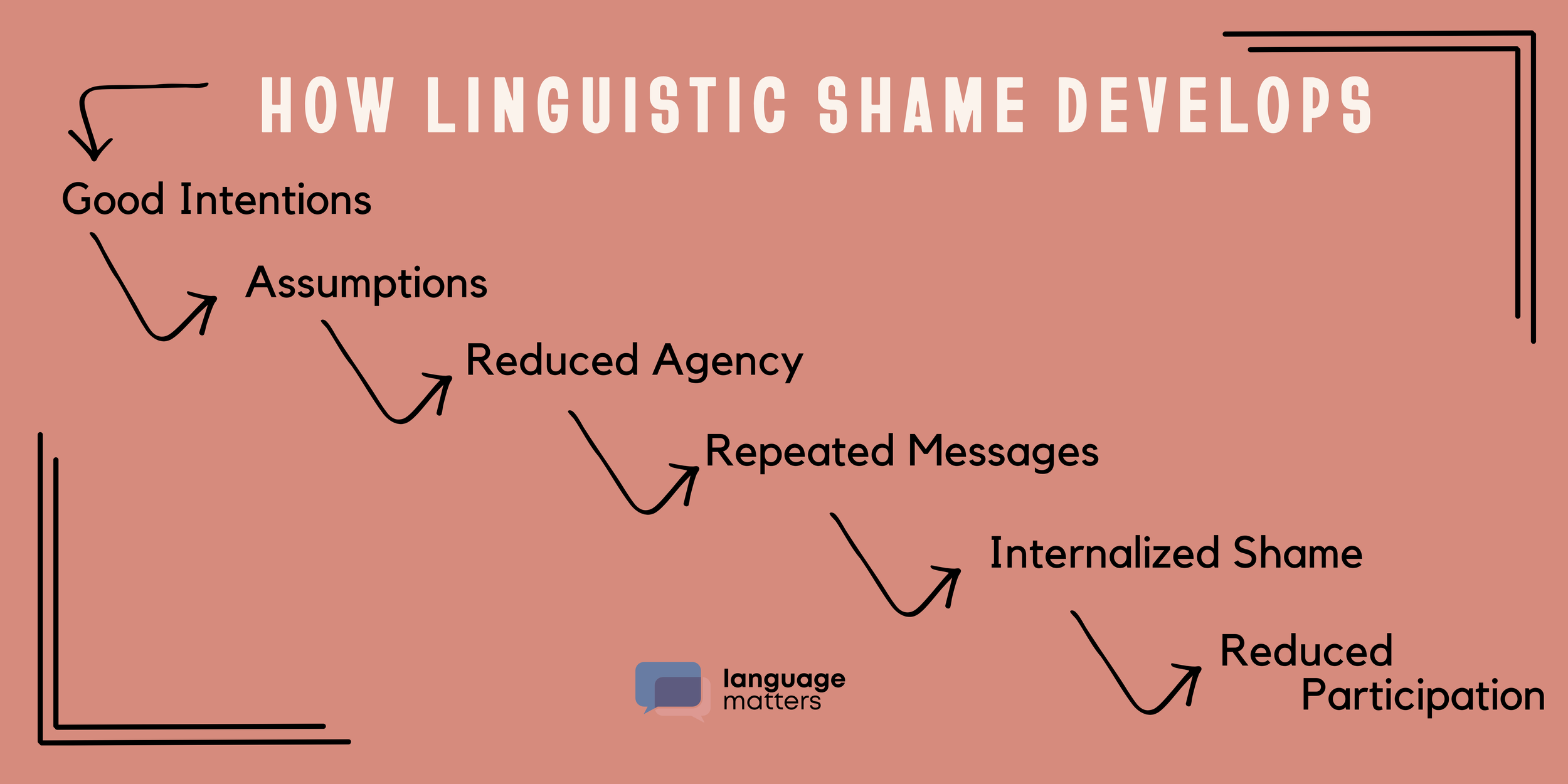
When I watched the video clip of Veronica during our coaching session, she genuinely believed she was helping. But when we step in to "fix" communication gaps without ever asking the student what they need, we aren't just teaching—we are gatekeeping. We treat their language as a deficit to be managed rather than a strength to be leveraged. This is the tension most of us live in. We tell ourselves we’re clearing the path, but by failing to invite the student into the conversation, we’re actually blocking their independence. That gap between our noble intentions and the student's reality is exactly where linguistic shame takes root.
We aren’t just teaching, we’re gatekeeping.
Let’s get into the research, shall we….
From a sociolinguistic perspective, language is never just communication. Language is tied to a human’s identity, culture and their sense of humanity. So when an MLs’ full linguistic repertoire is not recognized (or is actively minimized) they begin to internalize messages that delegitimize their sense of self and willingness to take risks in their learning. We can’t have that.
Language, however, is never just about communication; it is fundamentally tied to a student's identity, culture, and humanity. When a learner’s full linguistic repertoire is minimized or ignored, they internalize messages that delegitimize their sense of self and stifle their willingness to take risks. We cannot let that happen.
This is where translanguaging (García & Wei, 2014) becomes essential—not as an academic buzzword, but as a necessary reframe. If you have read this far, you are likely seeking what I call empowerment pedagogies, known for the following characteristics: they are student-centered, equity-focused, critically-conscious, and agentic. Educators who adopt these pedagogies begin from a place of high expectations—not mere rigor—for emergent bilinguals. For them, advocacy is embedded in every lesson plan, parent letter, and portfolio assessment. Ultimately, translanguaging scholarship reminds us that multilingual learners do not operate in separate language 'boxes.' Instead, they draw from an integrated linguistic system to make meaning, think deeply, and participate fully.
Empowerment pedagogies are: student-centered, equity-focused, critically-conscious, and agentic.
From assumption to inquiry: marching towards an empowerment pedagogy
Now you’re ready to engage in some doable disruptions. I’ll get you started with three right off the bat:
1. Pause before Translating
Translation is not the issue. Automatic, uninvited translation is.
2. Notice deficit language in adult conversations
If you’re hearing “they aren’t proficient,” then ask yourself, “what would an asset-reframe sound like?” You’d be surprised at how effective this move is, and how once you begin repeating yourself, how others will join in your cause.
3. Center student voice as data
Move from making assumptions to asking students what they actually need.
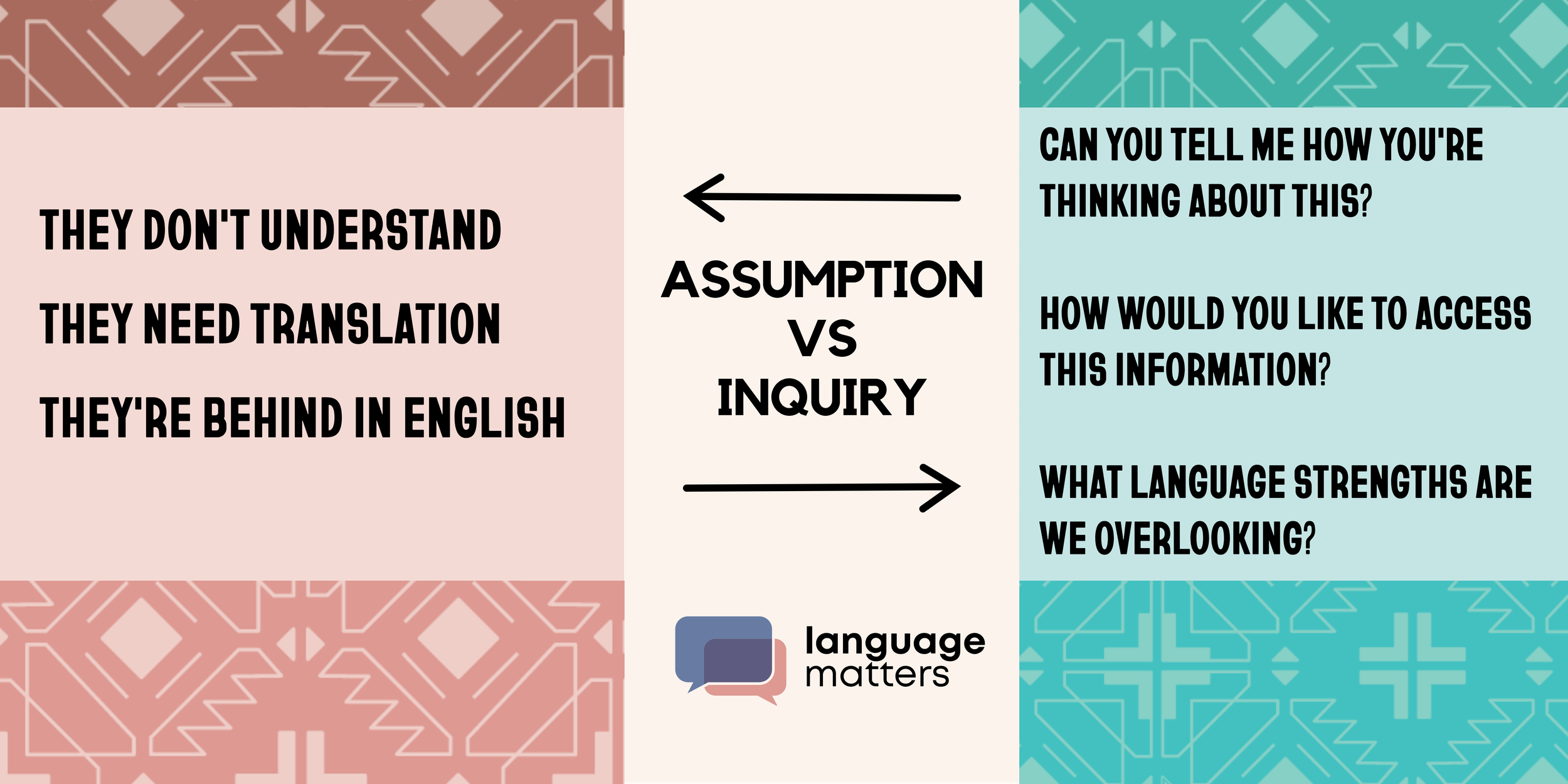
Use these reframes with your colleagues to move your district away from deficit thinking towards the curiosity mindset that will empower your MLs to greatness. Then- book a free coaching to advance your linguistic justice goals with the gentle guidance and support you need.
Your marching orders
Reflecting on the moment with Veronica, it becomes clear that true equity requires us to stop assuming and start inquiring. When we shift from "fixing" to "empowering"—creating classrooms where students are spoken with rather than for—we dismantle the quiet, harmful patterns of linguistic shame. Empowerment pedagogy isn't just a theory for the future; it's a practice for right now, allowing us to leverage a student’s full linguistic repertoire as a strength rather than a deficit.
You don't have to navigate this shift alone. If you're ready to move from awareness to action, you can download my guide, Doable Disruptions for the Monolingual Bias, to start interrupting these patterns in your own classroom today. For a deeper, personalized dive into your specific school context, I invite you to book my hour long PD “Why Translating doesnt work for Newcomer ELLs” to map out a clear path toward genuine linguistic justice.
